

Wearing a hat that feels like a vice grip by noon is a common frustration for professionals, outdoor enthusiasts, and commuters alike. According to recent ergonomic studies on headwear, approximately 60% of users experience tension headaches or scalp irritation due to improper band tension or non-breathable materials. This statistic highlights why fit is not just a matter of aesthetics but a critical component of physical well-being. At GetBanks, we understand that the right headwear should disappear on your head, allowing you to focus entirely on your day. This guide details the precise metrics and material choices necessary to achieve that level of comfort.
Understanding Head Circumference and Sizing
The foundation of any comfortable hat is accurate measurement. Most people guess their size, leading to hats that are either too loose or painfully tight. A hat that is too tight restricts blood flow to the scalp, causing fatigue and headaches. Conversely, a hat that is too loose will shift constantly, requiring you to adjust it throughout the day, which is distracting and uncomfortable.
To measure correctly, use a flexible tape measure around the widest part of your head, typically just above the eyebrows and ears. Record this number in inches or centimeters. When browsing our collection of premium headwear, cross-reference your measurement with the specific size chart provided for each product. Sizing can vary significantly between brands and even between different styles within the same brand.
It is also important to note that head size can fluctuate slightly due to temperature and hydration levels. If you are between sizes, it is generally safer to choose the larger size and use an adjustable strap or sweatband to secure it. This approach prevents the "hat hair" and indentation marks that come from over-tightening.
Material Science and Breathability
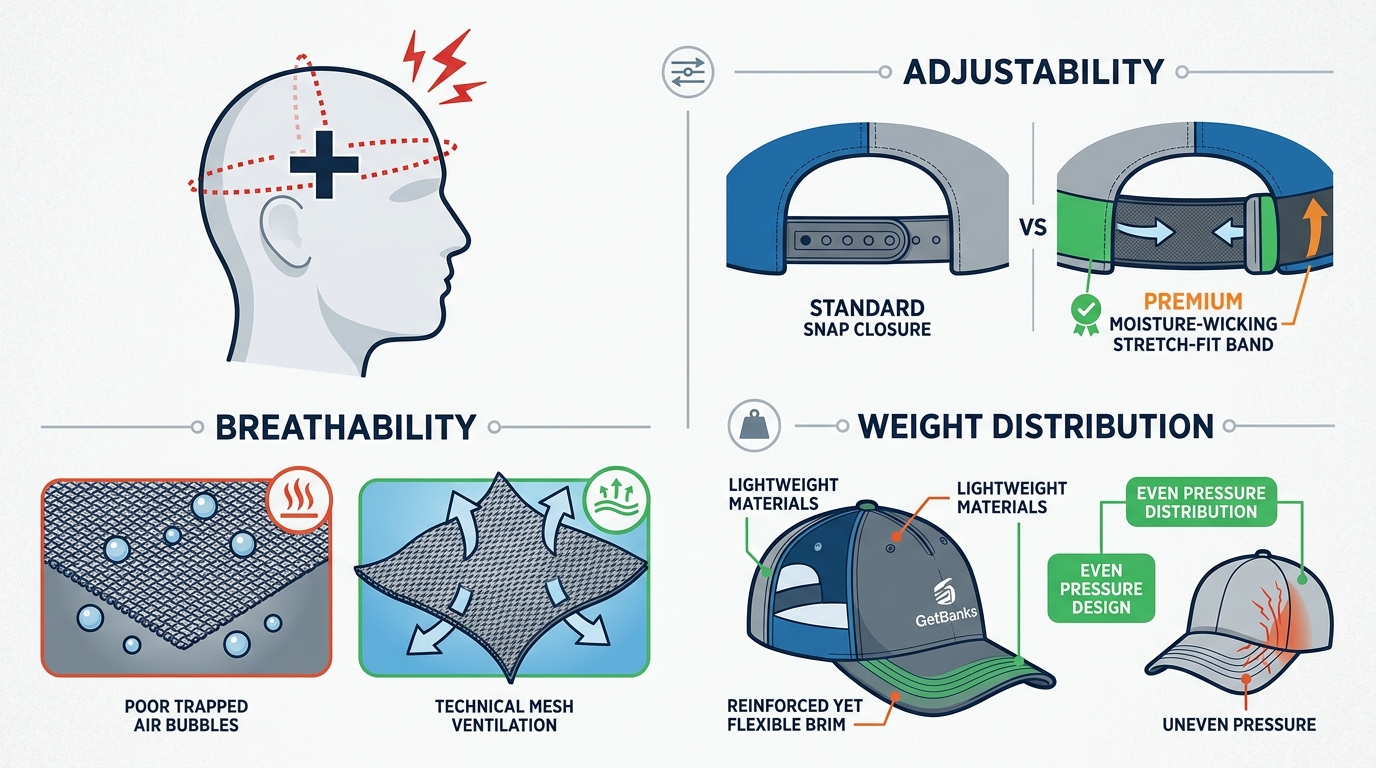
The fabric of your hat dictates how your head regulates temperature. For all-day wear, breathability is non-negotiable. Moisture-wicking fabrics pull sweat away from the skin, allowing it to evaporate quickly. This keeps your scalp dry and prevents the clammy feeling that leads to discomfort.
When evaluating materials, look for natural fibers like cotton or wool blends for moderate climates. Cotton is soft and absorbent, while wool provides excellent insulation and moisture management even when wet. For hot weather, synthetic blends designed for performance, such as polyester with mesh panels, offer superior cooling. You can explore our detailed material guide to understand the specific benefits of each fabric type we stock.
Avoid cheap, non-breathable synthetics that trap heat against your scalp. These materials often cause itching and irritation after just a few hours of wear. Prioritize hats that explicitly mention "breathable," "moisture-wicking," or "mesh-backed" in their descriptions. These terms indicate a design focused on long-term comfort rather than just initial appearance.
Band Tension and Adjustment Mechanisms
The sweatband is the contact point between the hat and your head. Its construction and tension are critical for comfort. A well-designed sweatband should be soft, absorbent, and securely stitched to prevent rubbing. Look for hats with leather or fabric-lined sweatbands that feel smooth against the skin.
Adjustment mechanisms allow you to fine-tune the fit. Common options include:
- Hook-and-loop straps: Easy to adjust but can wear out over time.
- Sliding buckles: Durable and secure, often found in outdoor gear.
- Drawstrings: Offer a customizable fit but can be cumbersome to adjust.
- Stretch fits: Provide a consistent, gentle pressure without hardware.
At GetBanks, we curate hats that feature high-quality adjustment systems. You can view our selection of adjustable hats to find mechanisms that suit your preference. Avoid hats with rigid, non-adjustable bands unless you are certain of your exact size, as these offer no room for error.
Crown Structure and Ventilation
The crown of the hat houses the majority of your head. Its structure affects both the fit and the airflow. A crown that is too deep can cause the hat to sit too low on your face, obstructing your vision. A crown that is too shallow can feel tight and cause pressure points on the top of your head.
Ventilation is another key factor. Hats with eyelets, mesh panels, or perforated crowns allow hot air to escape, keeping your head cooler. This is particularly important for outdoor activities or warm climates. When shopping, look for ventilated options that balance airflow with structural integrity.
Consider the shape of the crown as well. A structured crown maintains its shape and provides a consistent fit, while an unstructured crown offers a more relaxed, conforming feel. Both have their place, but for all-day wear, a semi-structured crown often provides the best balance of comfort and style.
Comparing Hat Types for Specific Use Cases
Different hat styles offer different levels of comfort and functionality. Choosing the right style for your needs is essential for long-term wear. Below is a comparison of common hat types to help you decide.
| Hat Type | Best For | Comfort Factor | Key Feature |
|---|---|---|---|
| Baseball Cap | Daily wear, sports | High (if adjustable) | Brim protection, breathability |
| Beanie | Cold weather, casual | Medium (depends on material) | Warmth, stretch fit |
| Fedora | Formal, fashion | Low to Medium (often rigid) | Style, structured crown |
| Bucket Hat | Outdoor, sun protection | High (lightweight, loose fit) | 360-degree brim, packable |
| Visor | Hot weather, hair preservation | Very High (minimal contact) | Maximum airflow, no top coverage |
For example, if you have long hair or wear your hair up, a visor might be the most comfortable option as it eliminates pressure on the top of your head. If you need sun protection for your ears, a bucket hat or a wide-brimmed cap would be more suitable. Understanding your specific needs will narrow down your choices significantly.
Key Takeaways
- Measure Accurately: Always measure your head circumference before buying. Do not rely on guesswork.
- Prioritize Breathability: Choose moisture-wicking fabrics to prevent sweat buildup and irritation.
- Check the Sweatband: A soft, lined sweatband is essential for preventing chafing and headaches.
- Adjustability is Key: Opt for hats with adjustable straps or stretch fits to accommodate natural size fluctuations.
- Match Style to Activity: Use the comparison table to select a hat type that aligns with your primary use case.
- Material Matters: Natural fibers like cotton and wool offer better comfort for extended wear than cheap synthetics.
- Ventilation Helps: Look for mesh panels or eyelets to keep your head cool in warm conditions.
Frequently Asked Questions
How do I know if a hat is too tight?
If you feel pressure around your forehead or temples, or if you see red marks on your skin after removing the hat, it is too tight. A comfortable hat should feel secure without causing pain or indentation.
What is the best material for a hat to wear all day?
Cotton and wool blends are generally the best for all-day wear due to their breathability and softness. Performance synthetics with moisture-wicking properties are also excellent for hot weather.
Can I stretch a hat that is slightly too small?
Some hats, particularly those made of wool or cotton, can be gently stretched using a hat stretcher or by wearing them with a slightly larger headband. However, this is not a permanent solution for significantly ill-fitting hats.
How often should I replace my hat?
Replace your hat when the sweatband becomes worn, the shape no longer holds, or the material loses its elasticity. Regular cleaning can extend the life of your hat, but wear and tear are inevitable.
Do I need a specific hat size for different styles?
Yes, sizing can vary by style. For example, beanies often rely on stretch, while structured hats like fedoras require precise sizing. Always check the specific size chart for the style you are considering.
How do I clean a hat to maintain its comfort?
Follow the care label instructions. Most hats can be hand-washed with mild detergent and air-dried. Avoid machine washing and drying, as this can shrink the hat and damage the sweatband.
What is the difference between a structured and unstructured hat?
A structured hat has a stiff brim and crown that hold their shape. An unstructured hat is softer and conforms more to your head. Unstructured hats are often more comfortable for casual, all-day wear.
Find Your Perfect Fit at GetBanks
Choosing the right hat is an investment in your daily comfort and confidence. At GetBanks, we are dedicated to providing high-quality headwear that meets the highest standards of fit and comfort. Our team has carefully curated each piece in our hat collection to ensure it performs well for all-day wear. Visit our about page to learn more about our commitment to quality. Ready to upgrade your headwear? Shop our full collection now and find the hat that feels like it was made for you.