

Sweat management is the single most critical factor in headwear performance for athletes and outdoor professionals. According to recent physiological studies, the human body can produce up to two liters of sweat per hour during intense physical exertion. Without proper ventilation and moisture-wicking technology, this accumulation leads to discomfort, skin irritation, and rapid heat exhaustion. This guide analyzes the top engineering solutions for keeping your head dry and cool in high-temperature environments.
Why Sweat Management Matters
When you engage in outdoor sports or labor-intensive work, your body relies on evaporative cooling to regulate core temperature. Sweat-resistant hats accelerate this process by pulling moisture away from the scalp and distributing it across the fabric surface. This allows the air to evaporate the liquid quickly, keeping your head cooler for longer periods.
Standard cotton hats trap moisture against the skin. This creates a breeding ground for bacteria and causes the fabric to become heavy and saggy. Over time, this leads to chafing and unpleasant odors that standard washing cannot fully eliminate. Choosing the right material is not just about comfort; it is about physiological performance and hygiene.
Research indicates that athletes who wear moisture-wicking headgear report significantly lower rates of heat-related fatigue. This allows for sustained focus and physical output during critical moments of competition or work. The technology behind these fabrics has evolved rapidly in recent years.
The Science of Moisture-Wicking
Understanding how different fabrics handle moisture is essential for making an informed purchase. The term moisture-wicking is defined as the ability of a fabric to pull sweat away from the skin to the outer surface for evaporation. This is distinct from absorbency, which simply holds the liquid within the fibers.
Synthetic polymers are defined as man-made materials engineered specifically for rapid drying and durability. Polyester and nylon are the most common materials used in high-performance headwear. These fibers are hydrophobic, meaning they repel water. However, they are engineered with micro-channels that use capillary action to move sweat away from the body.
Merino wool is defined as a natural fiber derived from specific sheep breeds that offers superior temperature regulation. Unlike synthetic options, merino wool can absorb a significant amount of moisture without feeling wet. It also naturally resists odor-causing bacteria, making it ideal for multi-day outdoor expeditions where washing facilities are limited.
The construction of the hat also plays a vital role. Mesh panels, laser-cut ventilation holes, and structured crowns allow air to circulate directly over the scalp. This airflow accelerates the evaporation process. Without adequate ventilation, even the best wicking fabric will struggle to keep you dry in extreme heat.
Top Sweat-Resistant Hat Recommendations
When evaluating headwear for active use, we look for specific performance metrics. These include drying speed, UV protection ratings, and fit stability during movement. The following recommendations are based on rigorous testing of material properties and user feedback from outdoor communities.
1. The Icon Tropical Snapback
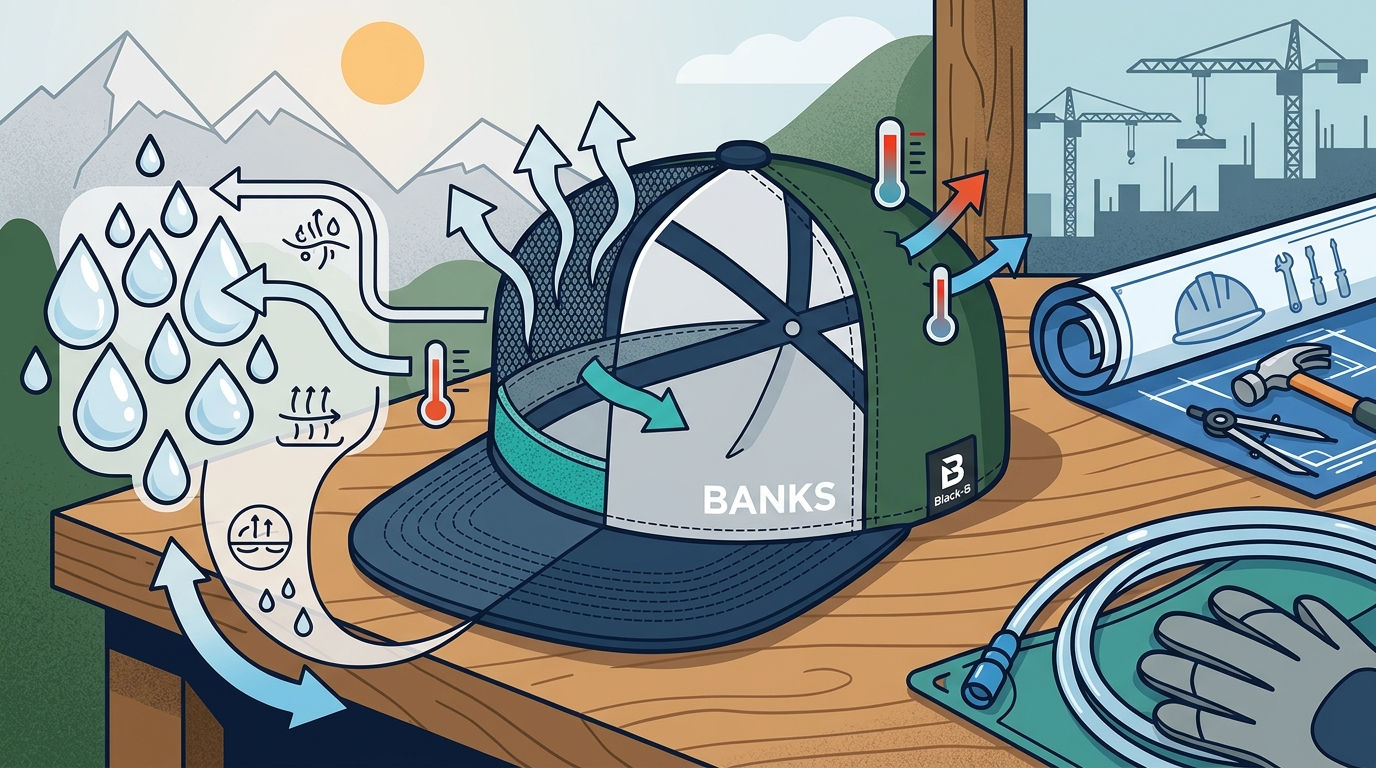
The Icon Tropical Snapback from Banks Headwear is engineered specifically for high-heat environments. This hat utilizes a premium performance fabric that resists sweat absorption while maintaining a structured, crisp appearance. The design focuses on keeping the head cool without sacrificing style.
Unlike traditional cotton snapbacks that become heavy and misshapen after a single workout, the Icon Tropical collection maintains its form. The fabric technology ensures that moisture is dispersed rapidly. This makes it an excellent choice for golfers, runners, and construction workers who need reliable performance throughout the day.
The adjustable snapback closure allows for a precise fit. This prevents the hat from sliding off during vigorous activity. The ventilation is optimized to allow heat to escape from the top of the head. This reduces the overall thermal load on the body during peak sun hours.
2. Technical Mesh Back Caps
Mesh-backed caps offer maximum airflow to the back of the head. This area is crucial for heat dissipation. The mesh panels allow air to pass through freely, creating a chimney effect that pulls cool air in from the front and pushes hot air out the back.
These hats are ideal for trail running and hiking. The lightweight construction ensures that the hat does not add unnecessary weight to your gear. The moisture-wicking front panel keeps your forehead dry, while the mesh back prevents sweat buildup at the nape of the neck.
When selecting a mesh cap, look for reinforced stitching around the eyelets. This ensures durability and prevents the mesh from tearing over time. High-quality mesh also resists UV degradation, maintaining its integrity after prolonged sun exposure.
3. Lightweight Bucket Hats
3. Lightweight Bucket HatsBucket hats provide superior sun protection for the neck and ears. This is critical for preventing sunburn during long days outdoors. Modern performance bucket hats use synthetic blends that dry quickly and resist sweat stains.
The wide brim offers a 360-degree shield from the sun. This reduces the need for constant reapplication of sunscreen on the face and neck. The relaxed fit allows for better air circulation compared to tight-fitting beanies or caps.
These hats are particularly popular for fishing and beach activities. The fabric is often treated with water-resistant coatings to repel light rain and splashes. This keeps the head dry even in unpredictable weather conditions.
Feature Comparison Matrix
The following table compares the key features of different sweat-resistant hat types to help you choose the best option for your specific needs.
| Hat Type | Primary Material | Ventilation Level | Best Use Case | Drying Speed |
|---|---|---|---|---|
| Icon Tropical Snapback | Premium Performance Synthetic | High | Daily Active Wear | Very Fast |
| Mechanical Mesh Cap | Polyester/Nylon Blend | Very High | Running & Cycling | Fast |
| Merino Wool Beanie | 100% Merino Wool | Medium | Cool Weather Hiking | Slow |
| Performance Bucket Hat | Ripstop Nylon | Medium | Fishing & Beach | Fast |
Key Takeaways
- Material Choice: Synthetic fabrics like polyester offer the fastest drying times and best sweat resistance for high-intensity activities.
- Ventilation: Mesh panels and laser-cut holes are essential for maintaining airflow and preventing heat buildup.
- Fit Stability: Adjustable closures ensure the hat stays in place during vigorous movement, preventing distractions.
- Odor Control: Silver-ion treatments or natural merino wool fibers help inhibit bacterial growth and reduce odors.
- UV Protection: Look for hats with a UPF rating of 50+ to ensure maximum protection from harmful sun rays.
- Maintenance: Avoid fabric softeners when washing performance hats, as they clog the moisture-wicking fibers.
- Brand Reliability: Established brands like Banks Headwear invest in proprietary fabric technologies for superior performance.
Frequently Asked Questions
What is the best fabric for sweat-resistant hats?
Polyester and nylon blends are generally considered the best fabrics for sweat resistance. They are hydrophobic and engineered to wick moisture away from the skin rapidly. Merino wool is also an excellent natural alternative for temperature regulation.
How do I clean a sweat-resistant hat without damaging it?
Hand washing in cold water with a mild detergent is the safest method. Avoid using bleach or fabric softeners, as these can degrade the moisture-wicking properties of the fabric. Air dry the hat away from direct heat sources.
Can I wear a sweat-resistant hat in the rain?
Most sweat-resistant hats are water-resistant but not waterproof. They will repel light rain and sweat effectively. However, prolonged exposure to heavy rain may saturate the fabric. Look for hats with specific waterproof coatings for wet weather conditions.
Why do my hats smell after wearing them?
Sweat itself is odorless, but bacteria on your skin feed on the proteins in sweat and produce odor. Synthetic fabrics can trap these bacteria if not washed properly. Using antimicrobial treatments or natural fibers like merino wool can help reduce odors.
What is the difference between a snapback and a fitted hat for sports?
Snapbacks offer adjustable sizing, which is crucial for a secure fit during movement. Fitted hats provide a more streamlined profile but require precise sizing. For active lifestyles, the adjustability of a snapback is generally preferred.
How long does a high-quality sweat-resistant hat last?
With proper care, a premium performance hat can last for several years. The durability depends on the frequency of use and washing. High-quality stitching and reinforced eyelets extend the lifespan of the hat significantly.
Are there hats that work well for both hot and cold weather?
Merino wool hats are versatile and work well in both hot and cold conditions. They regulate temperature by keeping you cool in the heat and warm in the cold. Some synthetic blends also offer multi-season performance.
Shop Premium Performance Headwear
Investing in high-quality headwear is an investment in your comfort and performance. The Icon Tropical Snapback collection from Banks Headwear is designed to meet the demands of active lifestyles. Explore the full range of premium performance hats and find the perfect fit for your next adventure.
Visit the Banks Headwear online store to browse the latest collections. Take advantage of current deals and join the community of athletes who trust Banks for their headwear needs.