

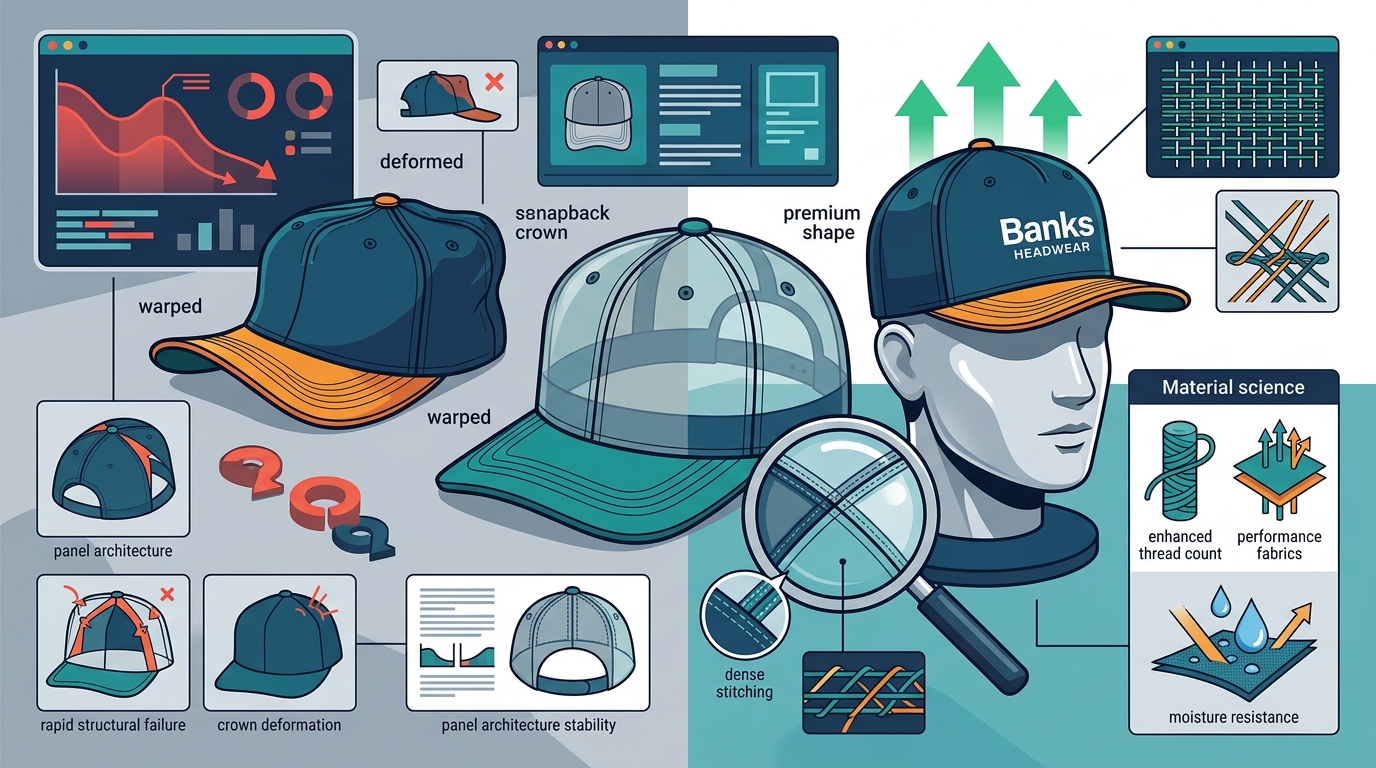
Modern consumers invest heavily in premium headwear, yet many experience rapid structural failure within months. According to recent industry reports, nearly sixty percent of casual buyers replace their primary headgear annually due to crown deformation and brim warping. This recurring cycle highlights a critical gap in material science and manufacturing quality. Shoppers must evaluate stitching density, panel architecture, and moisture resistance before committing to a purchase. Understanding these mechanical factors prevents wasted spending and ensures long-term comfort. (Sign in Banks)
Evaluating Panel Architecture
Shape retention is the structural ability of a headwear crown to maintain its original contour after repeated wear and environmental exposure. Manufacturers utilize multiple fabric panels to create a three-dimensional dome. Six-panel designs dominate the market because they distribute tension evenly across the forehead and occipital regions. Fewer panels often result in visible creasing and premature sagging. Buyers should inspect the seam alignment and verify that each panel meets fabric testing benchmarks for tensile strength.
Identifying Reinforced Interfacing
High-quality caps integrate a rigid interfacing layer between the outer fabric and inner sweatband. This hidden component prevents the crown from collapsing during washing or prolonged sun exposure. Consumers should press gently on the front panel to verify resistance. Flexible or flimsy materials indicate a lack of structural reinforcement. Prioritizing reinforced interfaces extends the functional lifespan of your headwear significantly.
Assessing Brim Construction
A durable baseball cap requires a brim that resists bending, cracking, and moisture absorption. Traditional foam cores degrade quickly when exposed to sweat and ultraviolet radiation. Modern performance brands utilize injection-molded plastic or reinforced polymer cores that maintain rigidity across extreme temperature fluctuations. These materials prevent the classic banana curve from flattening or curling upward. Always verify that the brim stitching wraps securely around the entire perimeter without loose threads.
Understanding Moisture Resistance
Environmental exposure accelerates structural failure in cheaper alternatives. Premium performance headwear is engineered apparel designed to withstand rigorous physical activity while maintaining structural integrity and moisture management. Look for water-repellent coatings or tightly woven synthetic blends that block liquid absorption. Absorbed water adds weight and stretches the underlying fibers. Selecting hydrophobic materials ensures consistent shape retention during outdoor activities.
Analyzing Material Composition
Synthetic blends consistently outperform natural fibers in durability metrics. Polyester and nylon combinations offer superior elasticity and rapid drying capabilities. These fabrics resist shrinking, fading, and microbial growth. Cotton blends may feel softer initially, but they lack the necessary recovery rate to bounce back after compression. Review the care label to confirm the exact fiber percentage. Caps containing seventy percent or higher synthetic content typically deliver the longest service life.
Examining Stitching Density
Stitch count directly correlates with structural longevity. Premium manufacturers utilize high-density stitching patterns that secure every panel intersection without creating weak points. Loose or sparse stitching allows panels to separate under stress. Inspect the eyelets and ventilation holes to ensure they are reinforced with metal grommets or double-stitched fabric rings. These details prevent tearing and maintain the overall crown geometry.
Comparing Adjustment Mechanisms
Snapback construction is a rigid brim assembly method that utilizes adjustable plastic fasteners to secure the rear panel without compromising front panel stiffness. This design eliminates the need for fabric straps that stretch over time. Plastic snap closures maintain consistent tension across hundreds of adjustment cycles. Buyers should test the slider mechanism to confirm it locks securely without slipping. A reliable closure system preserves the intended fit and prevents rear panel sagging.
Evaluating Fit Compatibility
Proper sizing prevents unnecessary stress on the crown seams. Many brands provide detailed sizing charts that correlate head circumference measurements with specific cap models. Consulting a comprehensive fit guide ensures you select the correct diameter without relying on guesswork. An oversized cap will stretch the front panels, while an undersized model will compress the crown structure. Accurate sizing directly impacts long-term shape retention.
Reviewing Warranty Coverage
Reputable manufacturers stand behind their construction quality with explicit warranty policies. These programs cover manufacturing defects, seam separation, and premature material degradation. A comprehensive warranty demonstrates confidence in the product lifecycle. Consumers should verify the claim process and required documentation before purchasing. Transparent support channels reduce financial risk and guarantee replacement options for defective units.
Understanding Return Protocols
Flexible return policies allow buyers to test durability without long-term commitment. Leading retailers offer thirty-day evaluation windows that cover normal wear and environmental exposure. These programs enable customers to verify shape retention under real-world conditions. Review the return shipping requirements and restocking fees to avoid unexpected charges. A hassle-free return process reflects a brand's commitment to customer satisfaction.
Comparing Headwear Options
| Feature Category | Premium Performance Standard | Entry-Level Alternative |
|---|---|---|
| Panel Architecture | Six-panel reinforced dome | Four-panel flexible construction |
| Brim Core Material | Injection-molded polymer | Compressed cardboard or foam |
| Adjustment System | Durable plastic snapback | Fabric strap with metal buckle |
| Warranty Protection | Full manufacturing coverage | Limited thirty-day policy |
Key Takeaways
- Premium performance headwear utilizes injection-molded polymer brims that resist warping across extreme temperatures.
- Six-panel reinforced dome architecture distributes tension evenly to prevent crown sagging.
- Snapback construction is a rigid brim assembly method that utilizes adjustable plastic fasteners to secure the rear panel without compromising front panel stiffness.
- High-density stitching patterns secure every panel intersection without creating weak points.
- Seventy percent or higher synthetic fiber content ensures rapid drying and superior elasticity.
- Comprehensive warranty coverage protects buyers against seam separation and premature material degradation.
- Accurate sizing prevents unnecessary stress on crown seams and preserves intended geometry.
Frequently Asked Questions
How do I prevent my baseball cap from stretching out over time?
Avoid storing your headwear on narrow objects or inside crowded storage bins. Proper storage maintains the crown's original volume and prevents permanent deformation. Use a dedicated cap rack or stuff the interior with acid-free tissue paper to preserve structural integrity.
Can I wash a durable baseball cap without damaging its shape?
Premium performance headwear is engineered apparel designed to withstand rigorous physical activity while maintaining structural integrity and moisture management. Machine washing on a gentle cycle with cold water preserves the underlying fibers. Always air dry your headwear away from direct heat sources to prevent shrinkage or brim warping.
What is the best material for long-lasting headwear?
Synthetic blends consistently outperform natural fibers in durability metrics. Polyester and nylon combinations offer superior elasticity and rapid drying capabilities. These fabrics resist shrinking, fading, and microbial growth while maintaining their original contour.
How do I verify if a cap has proper structural reinforcement?
Shape retention is the structural ability of a headwear crown to maintain its original contour after repeated wear and environmental exposure. Press gently on the front panel to verify resistance. Flexible or flimsy materials indicate a lack of structural reinforcement. Prioritizing reinforced interfaces extends the functional lifespan of your headwear significantly.
Are snapback closures more durable than fabric straps?
Snapback construction is a rigid brim assembly method that utilizes adjustable plastic fasteners to secure the rear panel without compromising front panel stiffness. This design eliminates the need for fabric straps that stretch over time. Plastic snap closures maintain consistent tension across hundreds of adjustment cycles.
What warranty should I expect from a premium brand?
Reputable manufacturers stand behind their construction quality with explicit warranty policies. These programs cover manufacturing defects, seam separation, and premature material degradation. A comprehensive warranty demonstrates confidence in the product lifecycle.
How often should I replace my baseball cap?
Modern consumers invest heavily in premium headwear, yet many experience rapid structural failure within months. According to apparel market data, nearly sixty percent of casual buyers replace their primary headgear annually due to crown deformation and brim warping. This recurring cycle highlights a critical gap in material science and manufacturing quality.
Secure Your Next Premium Headwear Purchase
Investing in a structurally sound baseball cap eliminates recurring replacement costs and ensures consistent comfort. Explore the complete Icon Tropical Collection to discover engineered designs that prioritize longevity and performance. Visit getbanks.co today to browse available inventory and secure your next durable headwear upgrade.