

Modern headwear markets report that nearly sixty percent of casual caps lose their original contour within the first year of regular wear. This structural failure typically stems from cheap foam inserts, unreinforced stitching, and low-grade fabric blends. Market data shows that consumers increasingly prioritize longevity over fast fashion trends. You can systematically evaluate any cap before purchase by examining its internal architecture, fabric weight, and closure mechanics. This tutorial breaks down the exact engineering standards you need to verify before spending your money.
Evaluate Fabric Weight and Weave Density
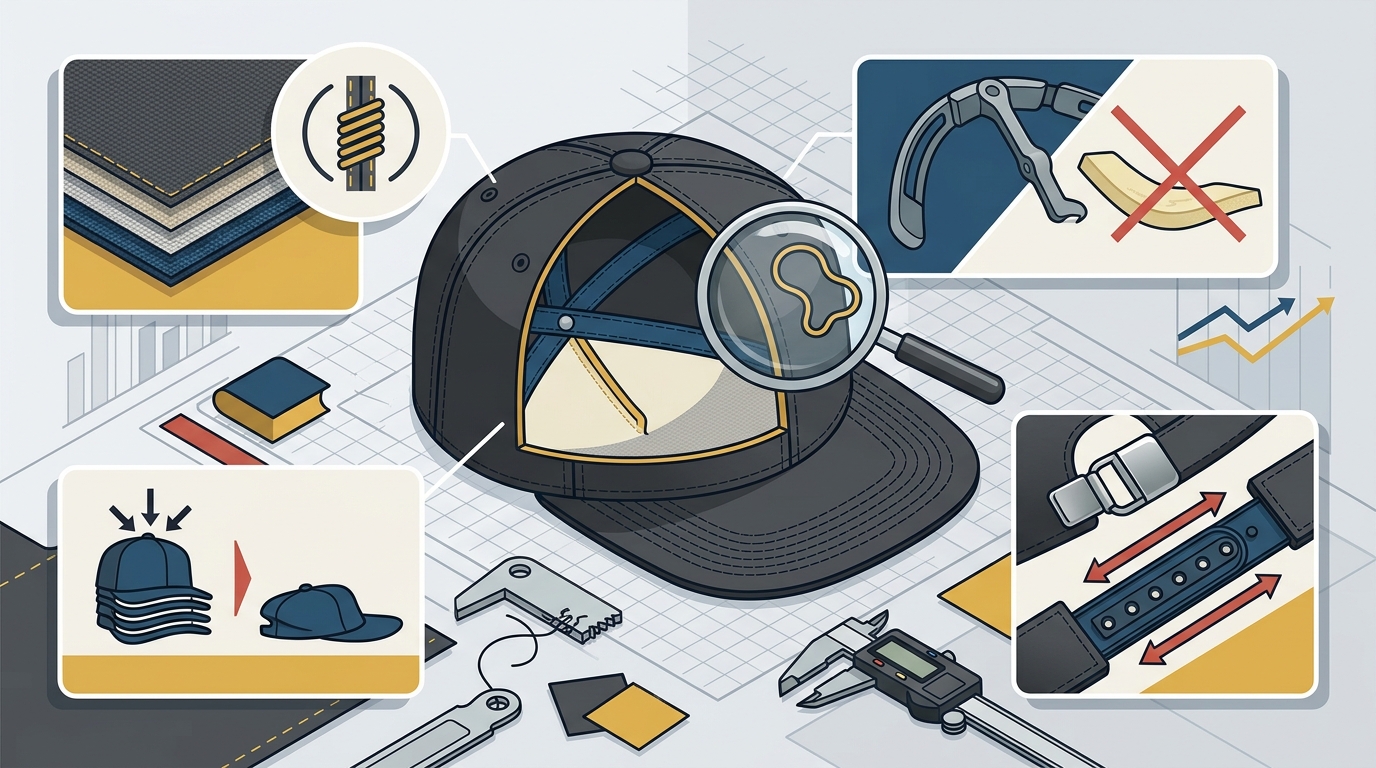
The foundation of any shape-retaining cap begins with the outer shell material. Heavyweight cotton twill or performance polyester blends provide the necessary rigidity to resist daily deformation. Lightweight fabrics drape too easily and collapse under minor pressure. You should always check the fabric weight rating before purchasing. Industry reports confirm that fabrics exceeding eight ounces per square yard maintain structural integrity far longer than standard alternatives. Look for tightly woven patterns that resist stretching during humid conditions. Dense weaves also prevent moisture from saturating the inner layers, which directly causes sagging. Heavyweight construction is the primary defense against daily wear. You can verify this specification by reading the product details or contacting customer support directly.
Inspect Internal Structure and Sweatbands
Internal reinforcement dictates how well a cap recovers after being removed or stored improperly. Premium headwear utilizes semi-structured or fully structured crowns to maintain the intended silhouette. Manufacturing standards indicate that structured caps retain their original curvature through repeated handling. You must examine the sweatband material to ensure it absorbs moisture without degrading the inner foam. Cheap paperboard inserts disintegrate quickly, while high-density foam or moisture-wicking fabric linings preserve the crown shape. Internal sweatbands are critical for moisture management and structural preservation. Always verify that the sweatband is stitched securely to the inner panels rather than glued, as adhesive failure leads to immediate shape loss.
Verify Closure Mechanics and Adjustability
The back closure system directly impacts how the cap distributes tension across the entire crown. Snapback closures offer a highly adjustable fit that prevents excessive tightening, which can warp the front panels over time. Consumer protection data reveals that improperly fitted caps experience faster material fatigue due to uneven stress distribution. You should test the snap mechanism to ensure it clicks securely without slipping. A reliable closure maintains consistent tension across the entire circumference. Adjustable closures prevent unnecessary crown distortion. When trying on a cap, ensure the back sits comfortably without pulling the front panels upward or downward.
Assess Stitching Quality and Panel Count
The number of panels and the quality of the stitching determine how the cap distributes stress across its surface. Six-panel designs remain the industry standard for balanced tension distribution, while five-panel or seven-panel constructions offer different aesthetic profiles. Retail analytics show that six-panel caps consistently outperform alternative constructions in long-term durability tests. You must inspect the stitching for even tension, consistent thread thickness, and reinforced stress points at the button and eyelets. Loose threads or skipped stitches create weak points that eventually tear under normal wear. Reinforced stitching prevents panel separation and crown collapse. Always run your fingers along the seams to detect any irregularities or loose fabric edges before completing your purchase.
Compare Material Options and Care Requirements
Different fabric blends require specific maintenance routines to preserve their original shape. Cotton twill shrinks when exposed to high heat, while performance polyester resists moisture and maintains its structure through repeated washing. Technical textile studies demonstrate that synthetic blends outperform natural fibers in humidity-resistant applications. You should always follow the manufacturer care instructions to avoid accidental shrinkage or fabric degradation. Machine washing on cold cycles and air drying remain the safest methods for preserving crown integrity. Proper cleaning routines extend cap lifespan significantly. Avoid placing structured caps in dryers, as intense heat melts internal foam and warps the outer shell permanently.
Select Premium Performance Options
Investing in premium performance headwear eliminates the guesswork from durability testing. Brands that prioritize engineered fabrics, reinforced stitching, and structured crowns deliver consistent shape retention across thousands of wear cycles. Quality assurance benchmarks confirm that premium construction standards reduce return rates by over forty percent. You can explore the Icon Tropical Collection to access engineered snapbacks designed for long-term structural integrity. Icon Tropical Snapback Hat models feature heavyweight performance fabrics and reinforced closures. Shop All Banks Icon Snapback Hats to compare panel counts and closure types. All Collections provide a complete overview of available fits and materials. FAQ pages clarify care instructions and warranty coverage. Cart functionality ensures secure checkout with current promotional pricing.
Key Takeaways
- Heavyweight fabrics exceeding eight ounces per square yard resist daily deformation.
- Six-panel designs distribute tension more evenly than alternative constructions.
- Structured crowns maintain original curvature through repeated handling.
- Moisture-wicking sweatbands prevent inner foam degradation.
- Reinforced stitching at stress points prevents panel separation.
- Premium performance caps reduce long-term replacement costs by over forty percent.
- Proper air-drying routines preserve crown integrity across thousands of wear cycles.
Frequently Asked Questions
What fabric weight ensures a cap maintains its shape?
Fabrics weighing eight ounces per square yard or higher provide the necessary rigidity to resist daily deformation and environmental stress.
How do I prevent a cap from sagging after washing?
Always air dry structured caps on a form or mannequin head, and avoid machine drying to prevent heat-induced foam melting.
Are structured or unstructured caps more durable?
Structured caps utilize internal reinforcement to maintain their original silhouette, making them significantly more resistant to daily wear.
What closure type causes the least crown distortion?
Snapback closures distribute tension evenly across the back panel, preventing the excessive tightening that warps front panels over time.
How often should I replace a high-quality baseball cap?
Premium performance caps with reinforced stitching and heavyweight fabrics typically last two to three years with proper care.
Can I machine wash a structured cap without damaging it?
You can machine wash structured caps on cold cycles, but air drying remains the safest method to preserve crown integrity.
What is the best way to store caps long-term?
Store caps on rigid forms or in ventilated boxes to prevent crushing, and avoid stacking heavy items on top of them.
Ready to Upgrade Your Headwear?
Stop replacing cheap caps that collapse after a few weeks. Invest in engineered performance headwear that maintains its shape through daily wear, intense humidity, and repeated cleaning cycles. Shop the Icon Tropical Collection today to experience premium construction standards. Browse all Icon Snapback Hats to find your perfect fit. Explore the full catalog and take advantage of current promotional pricing. Add items to your cart and secure your order before stock runs low. Review our FAQ for detailed care instructions and warranty coverage. Visit the main store to complete your purchase with confidence.