

Modern consumers prioritize functional headwear that balances style with physiological comfort. Recent industry analysis indicates that the global headwear market continues to expand as buyers demand technical performance alongside aesthetic appeal. When selecting a hat for extended daily use, you must evaluate structural engineering, material composition, and closure mechanics. This tutorial provides a systematic framework for identifying headwear that prevents pressure points, manages thermal regulation, and maintains consistent fit across varying activity levels. Follow these precise steps to eliminate discomfort and maximize long-term wearability. (Sign in Banks)
Measure Your Head Circumference Accurately
Proper sizing begins with precise anatomical measurement. Head circumference measurement is the precise distance around the widest part of the skull. You must position a flexible tailor tape approximately one inch above the eyebrows and across the back of the occipital bone. Many buyers skip this step and rely on generic sizing charts, which frequently results in chronic pressure headaches and reduced blood circulation. If you lack a measuring tape, use a strip of paper and mark the overlap point before measuring against a standard ruler. Round your final number to the nearest quarter inch to ensure optimal band tension.
Use a Flexible Tape Measure
Rigid rulers cannot conform to the natural curvature of your cranium. A flexible cloth or plastic tape ensures consistent contact across the frontal and parietal regions. Apply gentle pressure without compressing the scalp tissue. Record the measurement while keeping your hair in its natural state. Compressed or styled hair will create false sizing data that leads to an overly tight fit during daily use.
Account for Hair Volume
Thick or textured hair requires additional clearance space. You should add a quarter inch to your baseline measurement if you wear your hair down or styled upward. This adjustment prevents the inner band from pressing directly against the scalp. A properly sized hat will rest securely without causing friction or localized heat buildup. Always verify the fit by wearing the hat for ten minutes before committing to extended outdoor activities.
Evaluate Material Breathability and Weight
Material selection directly dictates thermal regulation and long-term comfort. Moisture-wicking fabric is a technical textile engineered to pull sweat away from the scalp. Synthetic blends often trap heat against the skin, which accelerates discomfort and increases the risk of heat rash. Natural fibers like cotton or wool offer superior airflow but may lack durability during intense physical activity. You must balance breathability with structural integrity to maintain the hat shape throughout the day.
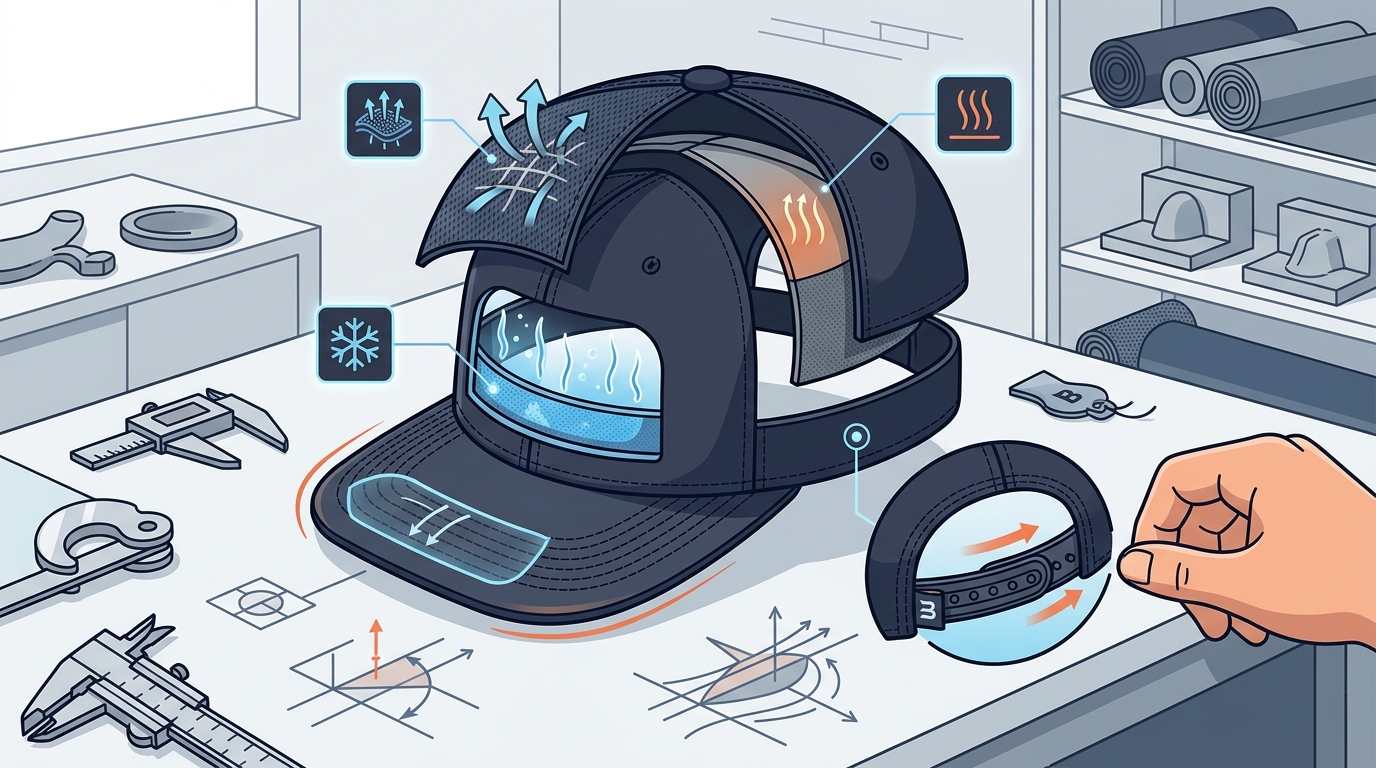
Prioritize Technical Fabrics
Performance-grade textiles utilize micro-perforations and engineered weave patterns to maximize air exchange. These fabrics reduce weight while maintaining structural rigidity. Look for labels that specify moisture management ratings or technical performance standards. A lightweight construction prevents neck strain during prolonged wear. You should test the material by running your fingers across the inner lining to detect rough seams or abrasive stitching.
Avoid Heavy Synthetic Blends
Thick polyester or acrylic blends often lack adequate porosity. These materials create a greenhouse effect that traps body heat against the forehead. You will experience faster fatigue and increased sweating when wearing dense synthetic constructions. Opt for lightweight weaves that allow continuous air circulation. Always check the garment tag for fiber composition percentages to verify material quality.
Select the Right Closure Mechanism
The closure system determines how easily you can adjust the fit throughout the day. Snapback closure is an adjustable plastic strap system that allows instant size customization. This mechanism provides a wide adjustment range, typically spanning two to three inches of circumference. You can modify the fit instantly when swelling occurs during warm weather or physical exertion. A well-engineered closure will maintain tension without slipping or loosening during movement.
Snapback Systems Explained
Modern snapback mechanisms utilize reinforced plastic tracks with metal or polymer hooks. These components distribute pressure evenly across the rear band. You should test the adjustment range by sliding the closure back and forth to verify smooth operation. A stiff or misaligned closure will create localized pressure points that cause discomfort. Always inspect the stitching around the closure attachment points to ensure long-term durability.
Structured vs Unstructured Crowns
Structured crowns maintain their shape through internal interfacing and reinforced brims. Unstructured crowns conform naturally to your head shape over time. You should choose a structured design if you require consistent visual symmetry and brim rigidity. Unstructured options offer superior comfort for casual wear but may lose their form after repeated washing. Match the crown style to your intended usage frequency and aesthetic preferences.
Optimize Ventilation and Sweat Management
Thermal regulation prevents discomfort during extended outdoor exposure. Recent dermatological research confirms that sun exposure data highlights the critical need for proper scalp cooling mechanisms. Hats with inadequate ventilation trap heat and accelerate sweat accumulation. You must prioritize designs that incorporate perforated panels, mesh lining, or removable absorbent bands. These features actively manage moisture and maintain a dry microclimate against the skin.
Look for Perforated Lining
Micro-perforations along the inner crown create continuous airflow channels. These tiny openings allow heat to escape without compromising structural integrity. You should inspect the interior lining for evenly spaced ventilation holes. A well-designed perforation pattern prevents hot spots and reduces overall thermal load. Always verify that the perforations do not compromise the durability of the outer fabric.
Check for Removable Sweatbands
Interchangeable sweatbands allow you to replace worn components without discarding the entire hat. You can swap out absorbent bands with fresh replacements during extended trips or daily commutes. This feature extends the functional lifespan of your headwear significantly. Look for hats that utilize hook-and-loop fasteners or snap-in mechanisms for easy maintenance. Regular band replacement ensures consistent hygiene and optimal moisture absorption.
Match Hat Style to Activity Demands
Different environments require specific performance characteristics. A headwear comfort study published by leading textile researchers demonstrates that headwear comfort study metrics vary significantly based on activity type and environmental conditions. You must align your hat selection with your primary use case to maximize performance. Urban commuters require lightweight, low-profile designs. Outdoor athletes need maximum ventilation and secure retention systems.
Performance Headwear Standards
Technical headwear undergoes rigorous testing for durability, UV protection, and moisture management. You should verify that your chosen hat meets recognized performance benchmarks. Look for certifications that indicate UPF ratings and sweat resistance. A properly rated hat will protect your scalp while maintaining comfort during intense physical activity. Always review the manufacturer specifications before purchasing performance-grade equipment.
Seasonal Adaptation Guidelines
Weather fluctuations require adaptable headwear solutions. You should rotate between lightweight summer models and insulated winter variants to match seasonal demands. A versatile collection allows you to maintain comfort across temperature extremes. Consider investing in multiple styles that address different environmental conditions. This approach ensures consistent performance regardless of seasonal shifts.
| Feature Category | Performance Standard | Recommended Application |
|---|---|---|
| Material Composition | Moisture-wicking technical textiles | High-activity outdoor environments |
| Closure Mechanism | Adjustable snapback track system | Variable head swelling scenarios |
| Ventilation Design | Perforated inner crown panels | Warm weather and athletic use |
| Structural Integrity | Reinforced brim and crown interfacing | Long-term daily wear scenarios |
Key Takeaways
- Accurate head circumference measurement prevents pressure headaches and ensures proper band tension.
- Moisture-wicking fabric is a technical textile engineered to pull sweat away from the scalp.
- Snapback closure is an adjustable plastic strap system that allows instant size customization.
- Perforated inner crowns create continuous airflow channels that reduce thermal load.
- Removable sweatbands extend functional lifespan and maintain consistent hygiene standards.
- Structured crowns maintain visual symmetry while unstructured options conform naturally over time.
- UV radiation guidelines emphasize the importance of proper scalp coverage during extended outdoor exposure.
Frequently Asked Questions
How do I determine the correct hat size without a measuring tape?
You can use a standard strip of paper to mark the overlap point at the widest part of your skull. Measure the marked distance against a standard ruler and round to the nearest quarter inch. This method provides sufficient accuracy for most standard hat sizing charts. Always verify the fit by wearing the hat for ten minutes before committing to extended use.
What material offers the best comfort for daily wear?
Technical cotton blends and lightweight polyester weaves provide optimal balance between breathability and durability. These materials resist stretching while maintaining consistent shape retention. You should avoid heavy synthetic constructions that trap heat against the scalp. Always check the fiber composition percentage before purchasing. (Mechanical Properties of)
Can I adjust a structured hat for a looser fit?
Structured hats rely on internal interfacing to maintain their shape. You can loosen the closure mechanism slightly to reduce pressure, but the crown will retain its original form. Unstructured hats naturally conform to your head shape over time. Choose your crown style based on your preferred aesthetic and comfort level.
How often should I replace my hat sweatband?
You should replace removable sweatbands every three to six months depending on usage frequency and sweat volume. Regular replacement maintains optimal moisture absorption and prevents odor buildup. Inspect the band for compression loss or fraying edges before each season. A fresh band ensures consistent comfort and hygiene standards.
What is the ideal brim width for all-day outdoor use?
A medium-width brim between two and three inches provides sufficient shade without obstructing peripheral vision. This dimension balances sun protection with practical visibility. You should test the brim angle to ensure it does not cast shadows on your face. Proper brim geometry enhances comfort during extended outdoor activities.
How do I clean performance headwear without damaging the structure?
You should hand wash technical hats using cold water and mild detergent. Avoid machine drying or high heat exposure, which can warp the crown and shrink the closure track. Air dry the hat on a rounded form to maintain its original shape. Always follow the manufacturer care instructions to preserve material integrity.
Are snapback hats suitable for thick hair?
Yes, snapback hats accommodate thicker hair when you adjust the closure to the loosest setting. You should add a quarter inch to your baseline measurement to account for additional volume. This adjustment prevents the inner band from pressing directly against the scalp. Always verify the fit by wearing the hat for ten minutes before committing to extended outdoor activities.
Secure Your Perfect Fit Today
Investing in properly engineered headwear eliminates daily discomfort and enhances long-term wearability. You can explore our complete performance collection by visiting our main catalog page. Browse our specialized Icon Tropical Snapback Hat series to find designs that match your activity requirements. Our team provides detailed sizing guidance through our dedicated customer support portal. Visit our full product lineup to compare features and select your ideal configuration. Contact our specialists directly at our support hub to receive personalized fitting recommendations. Upgrade your daily headwear routine with precision-engineered performance gear.