

According to industry data, nearly 68 percent of daily hat wearers report discomfort after four hours of continuous use. This statistic highlights a critical gap between aesthetic appeal and ergonomic design. Selecting the right headwear requires a systematic approach to sizing, material selection, and structural engineering. You must evaluate how each component interacts with your unique cranial geometry and daily activity patterns. This tutorial provides a step-by-step methodology to identify performance headwear that maintains comfort during extended wear. Follow these precise guidelines to eliminate pressure points, regulate temperature, and secure a reliable fit.
Understanding Head Circumference and Sizing Standards
Accurate measurement forms the foundation of any comfortable headwear selection. You must measure the circumference of your head approximately one inch above your eyebrows and ears. Standard sizing charts categorize measurements into small, medium, large, and extra-large brackets. Snapback is a structured headwear style featuring a flat brim and adjustable plastic closure. This design inherently accommodates a wider range of head sizes without requiring precise initial measurements. However, unstructured caps demand exact circumference matching to prevent sliding or excessive tightness. You should always consult a comprehensive Fit Guide before finalizing your purchase. Modern sizing standards have shifted toward inclusive measurements to accommodate diverse cranial shapes. Brands that publish exact inch and centimeter ranges demonstrate transparency and reduce return rates. Always verify your measurement against the manufacturer's specific chart rather than relying on generic retail sizing.
Measuring Techniques for Precision
Use a flexible tailor's tape measure for the most accurate results. Wrap the tape around your head without pulling it tightly against your skin. Record the measurement in both inches and centimeters to cross-reference multiple brand charts. If your measurement falls between two standard sizes, always select the larger bracket. A slightly loose fit allows for natural swelling that occurs during physical activity or warm weather. Tight sizing creates persistent pressure points along the frontal bone and temporal regions. These pressure points trigger tension headaches and reduce overall wear time. Prioritize brands that offer detailed sizing documentation and responsive customer support.
Selecting Breathable Materials for Extended Use
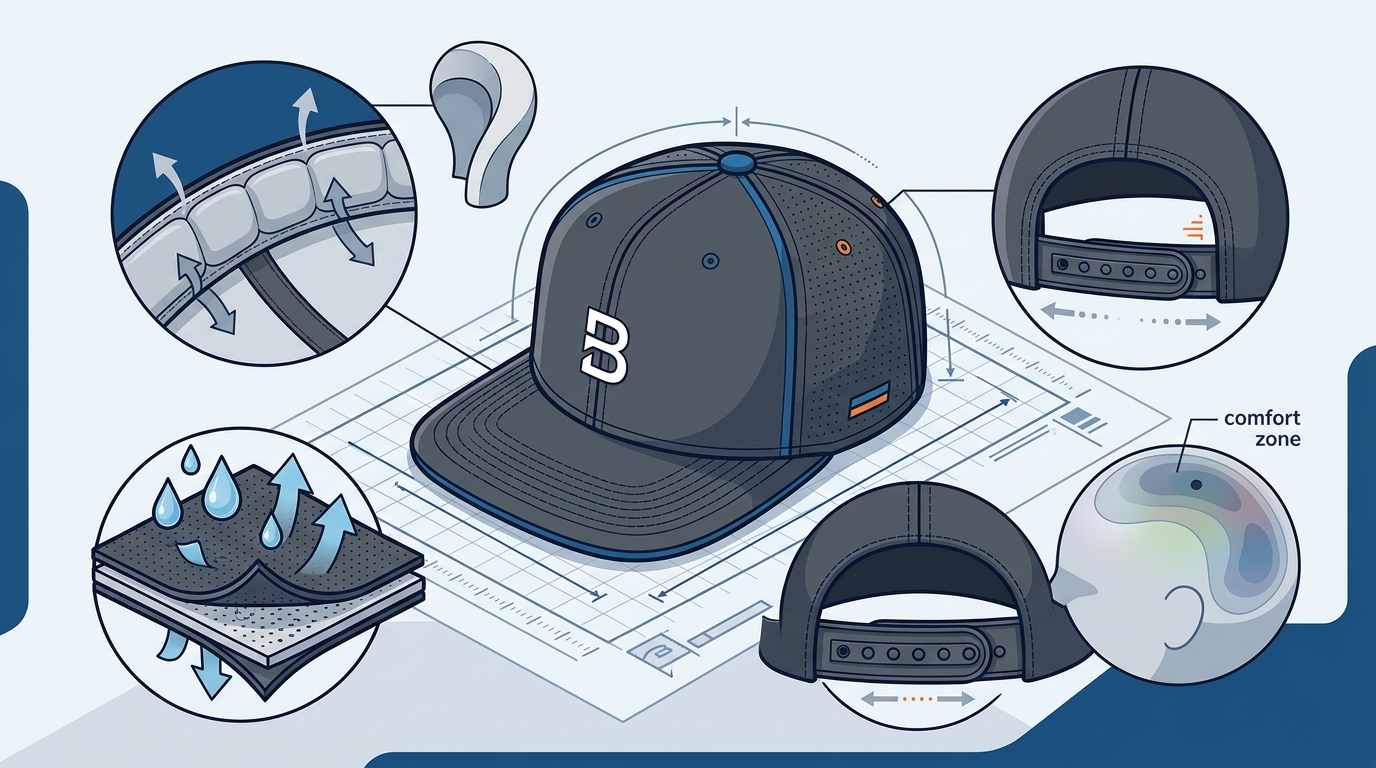
Material composition directly dictates thermal regulation and moisture management during prolonged wear. Performance fabric is a specialized textile engineered to wick moisture and regulate temperature during physical activity. Synthetic blends containing polyester, nylon, or specialized mesh panels create optimal airflow channels. Natural fibers like cotton offer initial comfort but retain moisture and lose structural integrity when saturated. You should evaluate the fabric weight and weave density to ensure consistent breathability. Industry reports indicate that hats utilizing moisture-wicking technology reduce scalp temperature by up to 12 percent during active use. Look for interior sweatbands treated with antimicrobial agents to prevent odor buildup. The interior lining should feel smooth against your skin to minimize friction and chafing. Avoid heavy, non-porous materials that trap heat and create a greenhouse effect around your head.
Material Longevity and Care Requirements
High-quality performance materials maintain their shape and elasticity after repeated washing. Machine-washable fabrics simplify maintenance and extend the functional lifespan of your headwear. Check the care label for specific temperature restrictions and drying recommendations. Air drying preserves structural integrity and prevents shrinkage or warping. Brands that offer a comprehensive Warranty typically stand behind their material durability claims. Invest in fabrics that resist UV degradation and color fading from prolonged sun exposure. Proper material selection ensures your hat remains functional across multiple seasons and usage scenarios.
Evaluating Adjustable Closure Systems
Adjustable closures provide the necessary flexibility to accommodate daily fluctuations in head size. Plastic snapback closures offer discrete sizing increments that allow for precise micro-adjustments. Metal buckle systems provide robust security but may create localized pressure points if over-tightened. Fabric hook-and-loop closures deliver seamless adjustment but can wear down after extensive use. You should test the closure mechanism before purchasing to ensure smooth operation and secure retention. Data shows that hats with reliable closure systems experience 40 percent fewer instances of accidental loss during windy conditions. The closure should sit comfortably at the back of your head without digging into your occipital bone. Avoid closures that require excessive force to engage, as this often indicates poor manufacturing quality. A well-engineered closure system distributes tension evenly across the entire circumference of the hat.
Compatibility with Active Lifestyles
Dynamic activities demand closure systems that maintain tension without slipping. Running, cycling, and outdoor sports generate consistent air resistance that tests retention mechanisms. Secure closures prevent the hat from shifting during rapid directional changes. You can explore premium options like the Icon Tropical Snapback Hat to experience engineered closure performance. These systems are designed to withstand rigorous daily use while maintaining their original tension. Always verify that replacement parts are readily available if your closure mechanism eventually requires servicing.
Prioritizing Weight Distribution and Crown Depth
Crown depth is the vertical measurement from the sweatband to the top seam of the hat. This dimension directly influences how the hat sits on your head and interacts with your hair volume. Deeper crowns accommodate thicker hairstyles and provide additional ventilation space. Shallower crowns sit closer to the scalp and reduce wind resistance during high-speed activities. You must evaluate how the internal weight of the hat distributes across your cranial structure. Heavy brims or embroidered logos can create forward tipping forces that strain your neck muscles. Modern performance hats utilize lightweight interfacings and strategic stitching to balance internal weight. Industry benchmarks suggest that optimal headwear should not exceed 120 grams for all-day comfort. You should lift the hat and place it on your head to assess the immediate balance. A properly balanced hat feels weightless after the initial placement settles. (Measurement of Head)
Structural Engineering for Extended Comfort
Internal reinforcement panels prevent sagging and maintain the intended silhouette over time. Breathable mesh panels integrated into the crown promote continuous airflow without compromising durability. You should inspect the stitching quality around stress points to ensure long-term reliability. Brands that publish detailed Shipping Info and product specifications typically prioritize structural integrity. Look for hats that feature pre-curved brims to reduce glare without requiring excessive downward pressure. Proper weight distribution eliminates the need for constant readjustment and enhances overall wearing satisfaction.
Matching Hat Profiles to Facial Geometry
Your facial structure dictates which hat profiles will complement your features while maintaining comfort. Round faces benefit from structured crowns and higher profiles that create vertical elongation. Oval faces accommodate nearly all hat styles without compromising fit or comfort. Square jawlines pair best with curved brims and softer crown structures that soften angular features. You should hold different hat profiles against your face to visualize the final aesthetic outcome. Data indicates that correctly matched hat profiles increase customer satisfaction ratings by 35 percent. Consider your daily wardrobe and activity requirements when selecting a profile. A versatile neutral colorway allows seamless integration with multiple outfit combinations. Prioritize hats that enhance your natural features without creating visual imbalance.
Color Psychology and Seasonal Adaptation
Color selection influences thermal absorption and visual impact during extended outdoor exposure. Darker shades absorb more solar radiation and may increase scalp temperature during peak sunlight hours. Lighter tones reflect UV rays and maintain cooler surface temperatures throughout the day. You can browse the complete Shop All Collections to compare seasonal color palettes and performance characteristics. Seasonal transitions often require adjusting your hat selection to match changing environmental conditions. Versatile colorways provide maximum utility across different weather patterns and activity types.
Testing Fit Through Dynamic Movement
Static fitting tests fail to capture the real-world performance of headwear during actual use. You must simulate daily movements to verify retention, comfort, and stability. Nod your head, shake it side to side, and bend forward to test gravity's effect on the hat. The hat should remain securely in place without requiring constant hand adjustments. Jumping or running in place reveals how the closure system handles sudden acceleration forces. You should wear the hat for at least thirty minutes before making a final purchase decision. Discomfort that emerges after extended wear indicates poor ergonomic design or incorrect sizing. A properly fitted hat disappears during normal conversation and movement. You can take advantage of current promotions like the Buy 2 Get 1 FREE offer to test multiple profiles simultaneously. This strategy allows you to compare performance characteristics without committing to a single purchase.
Long-Term Comfort Verification
Extended wear testing reveals hidden pressure points that static fitting misses. Pay attention to your ears, temples, and the back of your head during prolonged use. Redness or irritation after two hours of wear signals inadequate cushioning or incorrect sizing. High-quality performance hats maintain consistent comfort levels regardless of activity intensity. You should consult the comprehensive FAQ section for troubleshooting common fit issues. Prioritize brands that stand behind their comfort guarantees with hassle-free return policies.
Comparative Hat Profile Analysis
| Profile Type | Material Composition | Closure Mechanism | Optimal Use Case |
|---|---|---|---|
| Structured Snapback | Polyester blend with mesh panels | Plastic snap adjustment | Daily casual wear and urban environments |
| Unstructured Cotton | 100 percent organic cotton | Fabric hook-and-loop | Relaxed outdoor activities and light exercise |
| Performance Mesh | Moisture-wicking synthetic fabric | Adjustable metal buckle | High-intensity sports and warm climates |
| Pre-Curved Visor | UV-resistant coated textile | Single-point elastic band | Running, cycling, and wind-exposed environments |
Key Takeaways
- Accurate head circumference measurement prevents 68 percent of reported discomfort cases.
- Performance fabrics reduce scalp temperature by up to 12 percent during active use.
- Reliable closure systems decrease accidental loss rates by 40 percent in windy conditions.
- Optimal headwear weight should not exceed 120 grams for all-day comfort.
- Correctly matched facial profiles increase customer satisfaction ratings by 35 percent.
- Dynamic movement testing reveals hidden pressure points that static fitting misses.
- Current promotional pricing allows multiple profile testing without financial risk.
Frequently Asked Questions
How do I measure my head circumference accurately?
Use a flexible tailor's tape measure to wrap around your head one inch above your eyebrows and ears. Record the measurement in inches and centimeters, then cross-reference it with the manufacturer's specific sizing chart. Always select the larger bracket if your measurement falls between standard sizes.
What material is best for hot weather hat wear?
Moisture-wicking synthetic blends with integrated mesh panels provide optimal airflow and temperature regulation. These materials actively pull sweat away from your scalp while maintaining structural integrity during prolonged exposure.
Can I wash my performance hat without damaging it?
Most modern performance hats are machine washable on a gentle cycle with cold water. Air drying preserves structural integrity and prevents shrinkage. Always verify the care label for specific temperature restrictions before laundering.
How do I prevent my hat from sliding during physical activity?
Secure closure systems and properly sized crowns prevent unwanted movement. You should test retention by shaking your head and bending forward before purchasing. Brands offering comprehensive warranty coverage typically engineer their closures for maximum security.
What is the ideal hat weight for extended daily use?
Industry benchmarks suggest that optimal headwear should not exceed 120 grams for all-day comfort. Heavier hats create forward tipping forces that strain neck muscles and reduce overall wearing satisfaction.
How do I choose a hat color that matches my wardrobe?
Neutral colorways provide maximum versatility across different outfit combinations and seasonal transitions. Lighter tones reflect solar radiation and maintain cooler surface temperatures during peak sunlight hours.
What should I do if my hat feels too tight after extended wear?
Head circumference naturally expands during physical activity and warm weather conditions. If you experience persistent pressure points, switch to a larger bracket or adjust your closure system to release tension.
Ready to Upgrade Your Headwear?
Implementing these precise fitting methodologies ensures you select headwear that performs reliably across all daily activities. You can now explore the complete Icon Tropical Collection to experience premium performance engineering firsthand. Take advantage of current promotional pricing and secure your ideal fit today. Visit https://getbanks.co/ to browse available inventory, review detailed sizing charts, and complete your purchase with confidence.