

You finally found the perfect hat. It fit like a dream for the first few weeks, then slowly started sliding down your forehead. Sound familiar? Hat stretching is one of the most common frustrations for guys who wear caps daily. The good news: once you understand why it happens, you can prevent it and even reverse some of the damage. In this guide we break down the main causes of hat stretching, walk you through proven fixes, and show you what to look for in a hat that holds its shape over the long haul.
What Is Hat Stretching?
Hat stretching is the gradual loosening of a hat's crown and sweatband fibers due to repeated wear, moisture, and heat exposure. Over time the fibers are gently pulled and the hat expands slightly, sometimes by a fraction of an inch, sometimes much more. The result is a cap that no longer grips your head the way it did on day one.
A small amount of break-in is normal and even desirable. The problem starts when the stretching goes too far and the hat becomes unwearable.
Top Causes of Hat Stretching
Sweat and Moisture
Frequent exposure to sweat or moisture can cause a hat to stretch more quickly, especially if it is made from a natural fabric like cotton. Every time you work out, hike, or just sweat through a hot afternoon, moisture softens the fibers and allows them to expand.
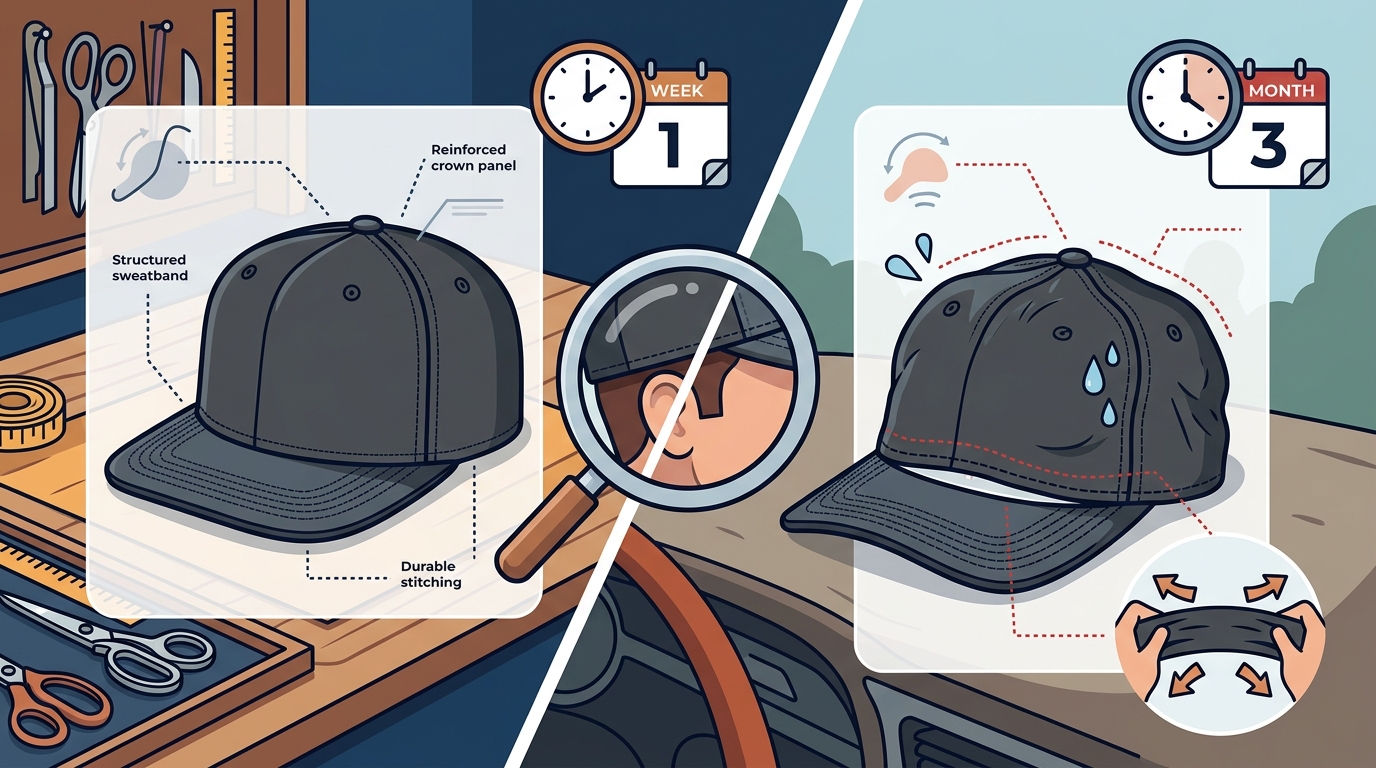
Heat Exposure
Leaving your hat on a car dashboard, near a radiator, or in direct sunlight degrades fibers and can shrink the sweatband while loosening the crown. Heat is a double threat: it weakens structural integrity and accelerates the moisture cycle.
Improper Storage
Cramming a hat into a backpack or tossing it in a pile puts uneven pressure on the crown. Over time this warps the shape and stretches the fabric in places it was never designed to flex. Storing your hat in a cool, dry place on a flat surface or hat rack helps maintain its natural shape.
Why Material Matters More Than You Think
Fabric elasticity is the single biggest factor in how quickly a hat stretches. Different materials have different levels of elasticity, which directly affects how much they will expand under stress.
| Material | Stretch Risk | Durability | Moisture Handling |
|---|---|---|---|
| Cotton | High | Moderate | Absorbs, holds moisture |
| Wool Felt | Moderate | High | Absorbs, slow dry |
| Polyester Blend | Low | High | Wicks moisture away |
| Performance Synthetic | Very Low | Very High | Wicks and dries fast |
Performance synthetic fabrics, like those used in Banks Icon snapback hats, are engineered to wick moisture and resist the fiber breakdown that causes stretching. That is a major advantage over traditional cotton caps.
How to Fix a Stretched-Out Hat
1. Wash and Reshape
If the hat is made of cotton, hand-wash it in cool water with mild detergent. The fibers may tighten slightly as they dry. Shape the crown by hand and let it air dry on a rounded object that matches your head size. Never use a clothes dryer, which can cause uneven shrinkage.
2. Add a Hat-Sizing Tape
Hat-sizing tape is a foam strip you stick inside the sweatband to reduce the circumference. It is an inexpensive, no-risk fix that can recover up to half an inch of lost fit. You can find it at most hat retailers or online.
3. Steam and Mold
Hold the hat over steam from a kettle for 30 to 60 seconds, then place it on your head and let it cool. The steam softens fibers temporarily and allows them to reset. This method works best on natural fiber hats like cotton and wool felt.
Prevention Tips That Actually Work
Preventing stretch is always easier than fixing it. Here are the habits that keep your hat fitting right:
- Rotate your hats. Wearing the same cap every day accelerates fiber fatigue. Rotating between two or three hats gives each one time to recover.
- Use both hands. Grabbing the brim with one hand and yanking the cap off your head stresses the crown unevenly. Use both hands on the brim when putting on or removing your hat.
- Air it out after wear. Set your hat on a flat surface or hat rack in a well-ventilated area so sweat can evaporate before it degrades the fibers.
- Spot clean, do not soak. Banks recommends spot cleaning with a damp white cloth and soap rather than full immersion.
- Choose moisture-wicking materials. A moisture-wicking hat is a hat designed with fabrics that draw sweat away from your skin and spread it across the surface for rapid evaporation. This keeps fibers drier and dramatically slows stretch.
Snapback vs. Fitted: Which Holds Shape Better?
A snapback hat is a cap with an adjustable plastic or metal closure at the back, allowing it to fit a range of head sizes. A fitted hat is a cap with a fixed circumference and no adjustment mechanism. Each style responds to stretching differently.
Fitted hats are especially vulnerable because once the fabric expands past its intended size, there is no way to tighten them. Snapbacks, by contrast, let you cinch the closure as the crown loosens. That built-in adjustability is one reason performance snapbacks, like the Banks Icon Tropical collection, maintain a dialed-in fit far longer than fitted alternatives.
Banks Headwear takes this a step further by building their snapbacks with lightweight, moisture-wicking materials that are breathable, water-friendly, and crafted to stand the test of time.
Key Takeaways
- Sweat, heat, and improper storage are the three biggest drivers of hat stretching.
- Cotton hats stretch the fastest; performance synthetics resist stretch the best.
- Hat-sizing tape is the quickest fix for a hat that is already too loose.
- Steam reshaping works well on natural fibers but should be done gently.
- Snapbacks with adjustable closures hold their fit longer than fitted caps.
- Moisture-wicking fabrics keep fibers drier and extend hat life significantly.
- Rotating between multiple hats reduces daily wear stress on any single cap.
Frequently Asked Questions
Why does my hat stretch out so fast?
The most common culprits are sweat, heat exposure, and poor storage. Natural fabrics like cotton lose shape faster when repeatedly exposed to moisture and high temperatures.
Can I shrink a hat that has stretched out?
Sometimes. Washing a cotton hat in cool water and air drying it can tighten fibers slightly. For synthetic hats, hat-sizing tape inside the sweatband is usually the better option.
Does sweat ruin hats?
Sweat does not ruin a hat immediately, but frequent moisture exposure softens fibers over time, leading to stretching and staining. Moisture-wicking hats handle this far better than cotton ones.
What is hat-sizing tape?
Hat-sizing tape is a self-adhesive foam strip placed inside the sweatband to reduce the interior circumference by up to half an inch. It is a simple, reversible fix.
Are snapback hats better than fitted hats for keeping shape?
Generally, yes. The adjustable closure on a snapback lets you compensate as the crown loosens, while a fitted hat offers no such adjustment.
How should I store my hat to prevent stretching?
Store it on a flat surface or hat rack in a cool, dry area away from direct sunlight. Avoid stacking heavy items on top of it or cramming it into tight spaces.
Do performance hats really last longer?
Performance hats built with synthetic moisture-wicking fabrics resist the fiber degradation that causes stretching. Banks Headwear, for example, engineers its snapbacks with lightweight materials designed to outlast traditional caps.
How often should I replace my hat?
With proper care and quality materials, a well-made hat can last years. If the crown is visibly misshapen or sizing tape no longer helps, it is time for a new one.
Ready for a Hat That Holds Its Shape?
If you are tired of hats that stretch out after a few months, it is time to upgrade. Shop the Banks Icon collection and experience premium performance snapbacks built with moisture-wicking, antimicrobial materials that keep their fit wear after wear.